Rising consumer expectations, retailer mandates, and regulatory pressure are forcing manufacturers to take a closer look at how food is produced, sourced, and delivered. At the same time, margins remain tight, making it essential that sustainability efforts also support operational efficiency. Globally, as much as 40% of food is lost or wasted before it’s eaten, accounting for nearly 10% of total greenhouse gas emissions.
For many food manufacturers, the challenge is more a lack of visibility than it is a commitment to Environmental, Social, and Governance (ESG) goals. Data lives in disconnected systems, spreadsheets, or manual reports, making it difficult to understand where waste is occurring, how resources are being used, or how progress toward sustainability targets can be measured. This is where ERP plays a foundational role.
Why Sustainability and ESG Matter More Than Ever
The food manufacturing industry faces ongoing scrutiny around food waste, energy and water consumption, ethical sourcing, labor practices, and supply chain transparency. According to ReFED, food manufacturers in the U.S. generated over 13 million tons of surplus food in a single year, representing nearly $42 billion in lost value, along with substantial water use and emissions.
At the same time, retailers and distributors increasingly require suppliers to demonstrate responsible practices. ESG reporting is becoming more structured, more frequent, and more closely tied to commercial relationships. Manufacturers that cannot provide accurate, consistent data often find themselves at a disadvantage.
How ERP Supports ESG Goals in Food Manufacturing
ERP sustainability in the food industry begins with a single source of truth, by connecting finance, inventory, production, purchasing, and supply chain data into one integrated platform. When production data is tied directly to inventory and financial records, manufacturers gain a clearer picture of how raw materials are consumed, where losses occur, and how operational decisions impact both cost and environmental outcomes. Instead of manually compiling ESG data at month‑end or year‑end, teams can access accurate information in real time.
Reducing Food Waste Through Visibility and Control
Food waste is one of the most tangible sustainability challenges manufacturers face, and it is also one of the areas where ERP delivers immediate value. Manufacturing accounts for almost one‑fifth of all surplus food generated across the food system, which means even small improvements in yield, planning, or shelf‑life management can have an outsized impact. DynamicsFoodERP allows manufacturers to track yield variance throughout the production process, monitor spoilage and expiration losses, and identify patterns across products, suppliers, or production lines. Over time, this data reveals where processes can be tightened, recipes refined, or forecasts improved.
Better demand planning also plays a critical role. By aligning sales forecasts with production schedules and inventory levels, ERP helps reduce overproduction; one of the most common contributors to waste. Importantly, these changes benefit both sustainability goals and profitability, reinforcing the idea that ethical operations and financial performance do not have to be at odds.
Optimizing Resources Beyond Waste Reduction
Sustainability in food manufacturing extends beyond waste. Energy use, labor efficiency, and material consumption all contribute to a company’s environmental footprint. ERP provides the operational transparency needed to understand how these resources are used and where improvements can be made.
Manufacturers can compare actual material usage against standard recipes, identify inefficiencies in production scheduling, and better align labor with demand. When production, purchasing, and finance operate within the same system, decisions are informed by accurate, up‑to‑date data rather than assumptions.
Many organizations also use ERP as a foundation for broader sustainability initiatives, integrating it with reporting tools like Power BI or external systems that track energy or logistics data. The result is a clearer, more complete picture of operational sustainability.
Simplifying ESG Compliance and Reporting
A common question among food manufacturers is how ERP supports ESG compliance in practice. The answer lies in consistency and traceability. While most food manufacturers recognize the importance of ESG, many struggle with execution.
DynamicsFoodERP centralizes the operational and financial data required for ESG reporting, including supplier records, inventory movements, production metrics, and governance controls. Because this information is captured as part of normal business processes, it is easier to validate, audit, and report on.
Instead of scrambling to assemble data from multiple sources, teams can rely on ERP to produce consistent metrics aligned with internal policies and external requirements. This reduces manual effort, minimizes errors, and builds confidence in sustainability disclosures, which are becoming an increasingly important factor for regulators, partners, and customers alike.
Strengthening Traceability and Ethical Sourcing
Ethical sourcing and traceability are critical components of ESG in the food industry. Consumers want to know where their food comes from, and manufacturers need to be prepared to respond quickly to quality issues or recalls. Consumer expectations are rising as well. Research from Purdue University found that 72% of consumers consider transparency extremely important when deciding which food brands to support.
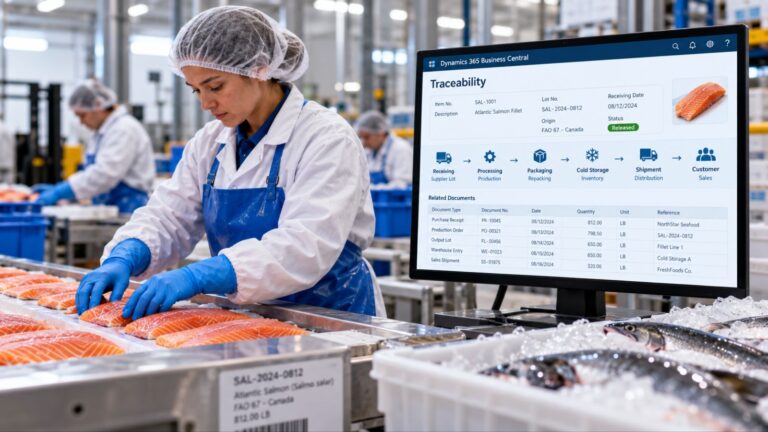
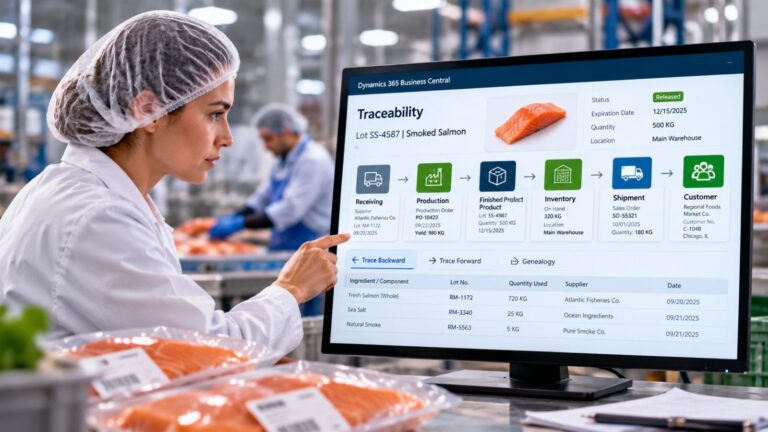
ERP‑driven traceability makes it possible to follow ingredients from supplier to finished product, supporting certifications, audits, and recall readiness. This level of transparency not only reduces operational risk but also reinforces trust with retailers and end consumers.
Turning Sustainability Into a Daily Practice
One of the biggest advantages of ERP is that it embeds sustainability into everyday decision‑making. When teams have access to real‑time dashboards and reports, they can spot inefficiencies early and make continuous improvements rather than relying on annual reviews – making sustainability less about meeting a reporting deadline and more about building better processes over time.
Supporting the Ethical Plate with DynamicsFoodERP
Sustainability in food manufacturing requires more than good intentions. It requires connected systems, reliable data, and clear visibility across the operation.
At DynamicsFoodERP, we help food manufacturers reduce waste, optimize resources, and support ESG compliance without adding unnecessary complexity. By aligning technology with sustainability goals, manufacturers can build operations that are not only more efficient, but more responsible.
If you’re exploring ERP sustainability in the food industry, the right system can help you serve a more ethical plate. Today and into the future.
Frequently Asked Questions: ERP, Sustainability, and ESG in Food Manufacturing
How does ERP support sustainability and ESG goals in food manufacturing?
ERP supports sustainability by giving food manufacturers clear, reliable visibility into their operations. When production, inventory, purchasing, and finance data all live in one system, it becomes much easier to measure food waste, monitor resource usage, and track supplier and production data for ESG reporting. Instead of relying on manual spreadsheets, manufacturers can use ERP data to make informed decisions that reduce waste, improve efficiency, and support compliance.
What makes DynamicsFoodERP different for sustainability tracking?
DynamicsFoodERP is purpose‑built for food manufacturers and built on Microsoft Dynamics 365 Business Central, which means sustainability insights come directly from core operational data. Food‑specific capabilities, such as batch tracking, lot traceability, yield management, and shelf‑life control, make it easier to understand where waste occurs and how resources are used across the production process. This food‑first design is critical for meaningful ESG initiatives.
Can DynamicsFoodERP help reduce food waste?
Yes. DynamicsFoodERP helps manufacturers reduce food waste by improving visibility into yield variance, inventory aging, expiration risk, and demand planning. When production and inventory decisions are aligned with real sales data, teams can avoid overproduction, catch issues earlier, and continuously improve processes that contribute to waste. These improvements support both sustainability goals and profitability.
How does DynamicsFoodERP support ESG reporting and compliance?
DynamicsFoodERP centralizes the data needed for ESG reporting by connecting operational and financial information in one system. This makes it easier to generate consistent, audit‑ready reports related to waste, sourcing, and governance controls. Because the data is captured as part of everyday operations, ESG reporting becomes more reliable and far less manual.
Is DynamicsFoodERP suitable for growing food manufacturers focused on sustainability?
Yes. DynamicsFoodERP is designed to scale with food manufacturers as sustainability and reporting requirements evolve. Built on Business Central, it provides a flexible foundation that supports future growth, regulatory changes, and deeper sustainability initiatives, without requiring a complete system overhaul as the business matures.