Let’s be honest: data isn’t the most glamorous part of running a food manufacturing business. But it is one of the most important. Whether you’re tracking inventory, managing compliance, or forecasting demand, clean data is what keeps everything running smoothly.
And when your data isn’t clean? That’s when things start to go sideways.
The Real Cost of Messy Data
You might not see it right away, but poor data hygiene can quietly drain your resources. According to Gartner, businesses lose an average of $15 million a year due to bad data. That’s not just a few typos, it’s delays, compliance issues, and decisions based on the wrong information.
In food manufacturing, the stakes are even higher:
- Production delays from inaccurate inventory levels
- Failed audits due to missing or incorrect traceability data
- Spoiled goods from mismanaged expiration dates
- Lost customer trust when orders are wrong or late
And while the exact time spent fixing data varies, IBM notes that poor data quality directly impacts operational efficiency, while Forrester reports that 7% of organizations lose $25 million or more annually due to data issues. That’s a lot of wasted potential that could be redirected toward growth and innovation.
How to keep your data clean, now and moving forward
Getting your data in shape isn’t just about flipping a switch. It’s a process. Here’s how to tackle it in two phases.
1. Clean up what you already have
Start by auditing your current data:
- Map your sources: Where is your data coming from? Legacy systems? Spreadsheets? Supplier portals?
- Spot the issues: Look for duplicates, outdated records, and inconsistent formats, especially in product codes, lot numbers, and expiration dates.
- Standardize everything: Create consistent naming conventions and units of measure.
- Purge and archive: Get rid of what you don’t need, and archive what you do for compliance.
- Use migration tools: These help you clean and import legacy data with built-in validation.
2. Build habits that keep data clean
Once your foundation is solid, keep it that way:
- Automate data entry: Use barcode scanning, EDI integrations, and supplier portals to reduce manual input.
- Set up validation rules: Make sure fields like lot numbers and expiration dates are required and formatted correctly.
- Train your team: Everyone should understand why clean data matters and how to maintain it.
- Schedule regular audits: Use reporting tools to catch issues early.
- Leverage AI: With Power Platform integrations, you can detect anomalies and predict problems before they happen.
How Business Central helps you clean up
This is where DynamicsFoodERP, built on Microsoft Dynamics 365 Business Central really shines.
Instead of juggling spreadsheets, disconnected systems, and manual processes, DynamicsFoodERP gives you a single source of truth. Everything, from financials to inventory to compliance, is connected and updated in real time.
Here’s what that looks like in action for food manufacturers:
- Centralized data: Whether you’re managing dairy aging, meat processing, or bakery recipe changes, everyone works from the same accurate, up-to-date information.
- Smart automation: Business Central flags duplicates, missing fields, and anomalies before they become problems, critical for avoiding spoilage or mislabeling.
- Role-based dashboards: Plant managers, QA teams, and finance leads each get tailored views of the data that matters most to them.
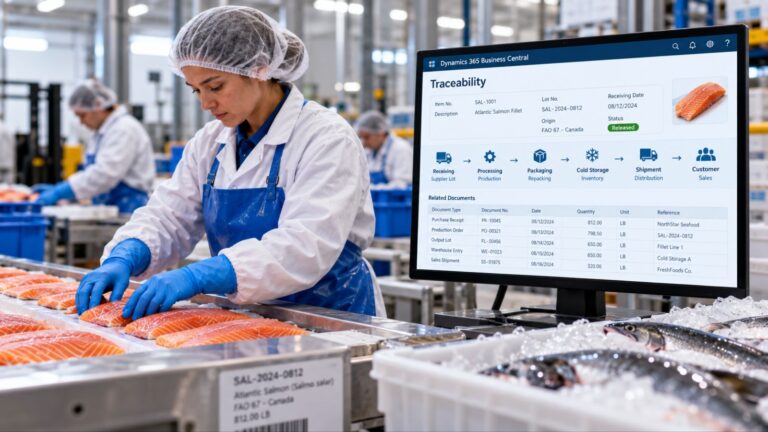
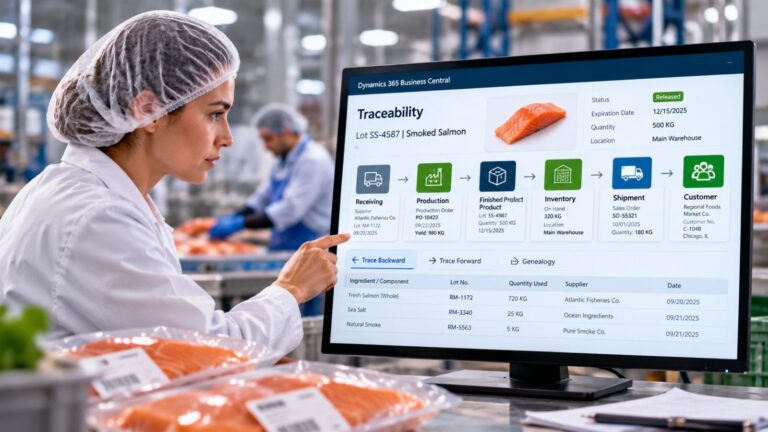
- Built-in compliance tools: Lot tracking, audit trails, and traceability features help you stay ahead of evolving regulations like FSMA 204.
- Powerful analytics: With Power BI integration, you can forecast demand, optimize batch planning, and reduce waste, whether you’re producing cheese, seafood, or packaged snacks.
DynamicsFoodERP is purpose-built for food and beverage companies. From managing catch-weight in meat processing to allergen tracking in bakeries, their solution adapts to the nuances of your sector. Their clients include seafood distributors, snack manufacturers, and dairy producers who’ve successfully modernized operations and improved traceability without sacrificing flexibility.
Why Liberty Grove Software Gets It
Liberty Grove Software has worked with food manufacturers for over 25 years, helping companies navigate everything from spoilage control to recipe management. Their team knows the industry inside and out, and they tailor every DynamicsFoodERP implementation to fit your unique needs.
Clean Data = Smart Growth
At the end of the day, clean data isn’t just about avoiding mistakes. It’s about unlocking better decisions, smoother operations, and faster growth. When your data is reliable, your team can move with confidence, and that’s a serious competitive edge.
Let’s make your data work harder
If you’re in food manufacturing, you already know how fast things move, and how costly delays can be. DynamicsFoodERP helps you build a data foundation that’s reliable, compliant, and built for growth.
Let’s explore what that could look like for your business.
Talk to our team or book a walkthrough today.