If you’ve ever prepared for a food safety audit, you know the drill: endless spreadsheets, scattered records, and a frantic race against the clock. Compliance is essential in food manufacturing, yet many companies still use outdated methods to manage it.
What are the true expenses of sticking with traditional methods, and what makes top food manufacturers choose automation instead?
Manual compliance: the silent drain on your business
Audits are a fact of life in food manufacturing. And every audit season, teams spend countless hours chasing down batch records, supplier certifications, and traceability data. Those hours add up to thousands of dollars in overtime and lost productivity. According to CRB’s Horizons report, nearly 70% of food manufacturers say automation boosts productivity, yet many still rely on outdated methods that slow them down. This can lead to:
- Time Drain: Teams spend days, sometimes weeks, chasing down batch records, supplier certifications, and traceability data.
- Human Error: Manual processes increase the risk of missing documents or incorrect entries, which can lead to failed audits or costly recalls.
- Resource Overload: Extra staff, overtime hours, and stress become part of the audit season routine.
- Opportunity Cost: Every hour spent on paperwork is an hour not spent on improving quality, innovating products, or scaling operations.
Why manual compliance is becoming unsustainable
The food industry is evolving faster than ever. Consumers demand transparency, regulators tighten standards, and supply chains stretch across continents. For example, the FDA’s FSMA Section 204 Traceability Rule will mandate enhanced recordkeeping for foods on the Traceability List, requiring manufacturers to maintain Key Data Elements (KDEs) for Critical Tracking Events (CTEs) and provide this data within 24 hours of an FDA request. That’s a level of speed and accuracy spreadsheets simply can’t deliver.
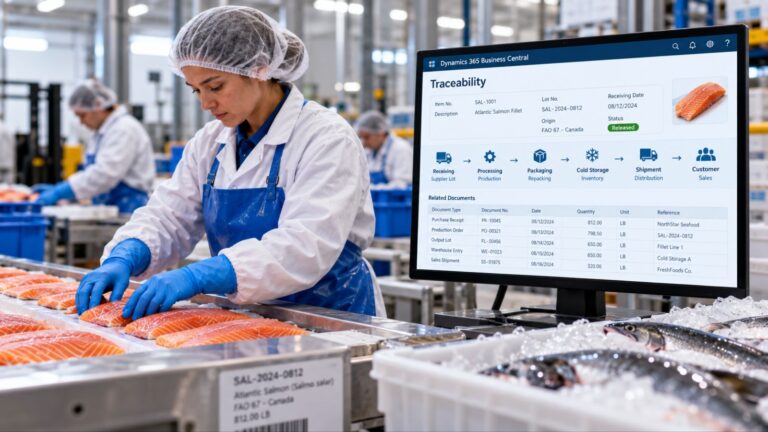
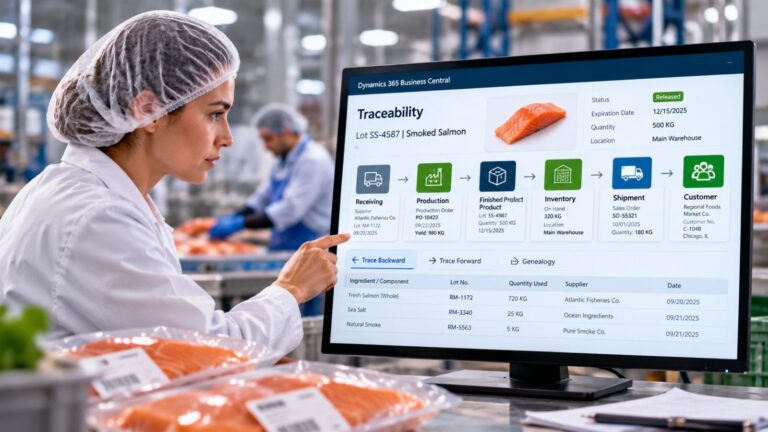
Consider this scenario: Your auditor requests a full traceability report for a specific batch. If your data lives in spreadsheets, filing cabinets, and disconnected systems, you’re in for a long night. Now imagine pulling that same report in seconds – with complete accuracy – because your system tracks every transaction automatically.
Automation: the new standard for compliance
Enter Microsoft Dynamics 365 Business Central, the ERP solution behind DynamicsFoodERP. It’s designed to take the pain out of compliance and turn it into a strategic advantage. Here’s how it transforms the process:
1. End-to-end traceability
From raw ingredients to finished goods, Business Central captures every movement in real time. Need to trace a product back to its supplier? Done. Want to verify allergen declarations? Easy. Complete visibility means you’re always audit-ready.
2. Automated documentation
Forget manual data entry and chasing down paperwork. Compliance records, including batch histories, certifications, and quality checks, are generated and stored automatically. When auditors come knocking, you have everything at your fingertips.
3. Real-time reporting
No more waiting days for reports. Business Central delivers instant, accurate insights. Whether it’s regulatory documentation or internal quality metrics, you can generate reports with a click.
4. Built-in workflows
Compliance involves more than simply keeping records; it requires adherence to proper procedures. Business Central enforces workflows for approvals, quality checks, and corrective actions, ensuring standards are met consistently.
The ROI of compliance automation
Numbers tell the story best. When food manufacturers move from manual processes to automation, the impact is immediate and measurable. Audit preparation time can drop from weeks to hours with ERP-driven workflows, delivering up to 60% faster compliance reporting (Prudence Consulting).
Risk reduction is another major win. Automated checks and workflows dramatically lower the chance of missing documents or making costly errors, which means fewer failed audits and fewer recalls. Regulatory pressure is also mounting: the FDA’s FSMA Section 204 Traceability Rule requires manufacturers to provide Key Data Elements within 24 hours of request (FDA), a demand manual systems can’t meet. For teams, the payoff is clear: less time buried in paperwork and more time focused on quality, innovation, and growth.
And then there’s trust. Transparency isn’t just a regulatory requirement—it’s what customers expect. Automation supports real-time traceability and reporting, strengthening food safety culture and building confidence with retailers and consumers (FDA Smarter Food Safety). In short, compliance automation doesn’t just save money; it transforms compliance from a cost center into a growth engine.
Beyond compliance: a strategic advantage
Besides just avoiding penalties, compliance also builds resilience and agility. When your processes are automated, you can respond faster to market changes, scale without chaos, and innovate without fear of regulatory setbacks.
Launch a new product line without worrying about how you’ll track allergens or verify supplier certifications. Or expand into new markets knowing your compliance framework can handle the complexity.
The bottom line
Manual compliance is a (not so) hidden drain on your resources and growth potential. The good news? You don’t have to live with it. By automating audits and compliance workflows with DynamicsFoodERP, powered by Business Central, food manufacturers can reclaim time, reduce risk, and focus on what really matters: delivering safe, high-quality products and growing their business.
Ready to eliminate the hidden cost of manual compliance?
Let’s talk about how DynamicsFoodERP can transform your audit process. Contact us today to learn more.