Tariffs have once again surged to the forefront of concerns for North American food manufacturers, and the disruptions caused by it. Supply chain disruptions are not something that is new to the food industry. Today, amid renewed trade tensions and rapidly shifting international agreements, manufacturers face an immediate need to respond proactively, and history has demonstrated that manufacturers who anticipate these disruptions and adapt swiftly can emerge resilient, even thriving amidst uncertainty.
In this blog, we’ll explore the current tariff landscape, revisit past experiences to glean critical lessons and opportunities, and most importantly, outline practical steps your organization can take now to stay ahead. Leveraging strategies like supply chain diversification and modern ERP solutions, food industry leaders can transform tariff challenges into opportunities for growth and operational excellence.
Raw Ingredients
Food manufacturers often rely on globally sourced ingredients – from spices and sweeteners to specialty additives. When tariffs are imposed on these imports, the immediate impact is higher input costs. Producers must decide whether to absorb these costs or pass them along. As a University of Chicago economist puts it, “most tariffs we put on other countries end up being paid by someone in the U.S., split between the consumer and the firm doing the importing.”
In 2022, the U.S. imported $364 million worth of spices, sourcing essentials like garlic, ginger, cinnamon, and chili peppers from countries such as China, India, and Mexico. Tariffs on these suppliers have driven up costs dramatically, with importers reporting 15–25% cost increases under current tariff rates.
When faced with cost surges, food manufacturers often seek alternative sourcing. However, shifting suppliers is not trivial – it requires vetting for quality, securing new contracts, and sometimes paying a premium for non-traditional sources. In the short run, many companies have little choice but to accept higher costs or reformulate recipes to use more locally available inputs.
Packaging Materials
Packaging is a critical and often overlooked component of food manufacturing costs. Whether it’s aluminum cans for beverages and soups, steel tins for canned foods, or specialized food-grade packaging films, tariffs on these materials or their inputs can reverberate through a manufacturer’s cost structure. The U.S. produces about 135 billion metal cans annually. When blanket tariffs are applied to imports, even if temporarily, it can raise costs for everything from sodas to canned vegetables. In 2018, for example, major beverage producers like Coca-Cola and craft brewers like Boston Beer announced price increases to offset higher aluminum costs following new tariffs. In a similar vein, craft brewing industry leaders have warned that recent proposed tariffs would “further increase the cost of cans for small producers.”
Opportunities for Domestic Competitiveness
Elevated import duties on foreign-produced foods can make domestically produced goods more price-competitive, encouraging consumers and retailers to favor local options. This shift not only supports local economies but also aligns with consumer preferences for fresher products and stringent food safety standards.
Studies estimate that processed food in the United States travels over 1,300 miles, and fresh produce over 1,500 miles, before reaching consumers. By producing closer to the point of consumption, U.S.-based manufacturers can reduce logistics expenses, improve product quality, and respond more rapidly to market shifts.
At the same time, nearly two-thirds of grocery shoppers would switch to brands that disclose more than just ingredient and nutritional information, seeking around manufacturing practices and ingredient sourcing. Domestic producers are uniquely positioned to deliver on both fronts: offering shorter, traceable supply chains and the operational agility needed to meet rising consumer expectations for freshness, safety, and accountability.
Building Resilience: Strategies and the Role of Technology
Tariffs and trade policies are likely to remain a source of uncertainty. Food manufacturing leaders, however, are not without recourse. Proactive strategies can soften the impact of such cost increases on the business. These include diversifying supply chains, adjusting sourcing and inventory strategies, and leveraging technology to increase agility. In fact, modern Enterprise Resource Planning (ERP) systems have become invaluable for navigating such disruptions. An industry-specific solution like DynamicsFoodERP can help food manufacturers respond to tariff volatility in several ways:
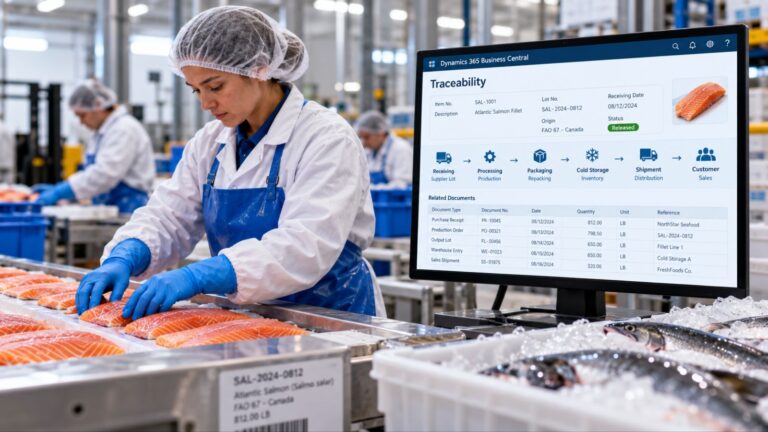
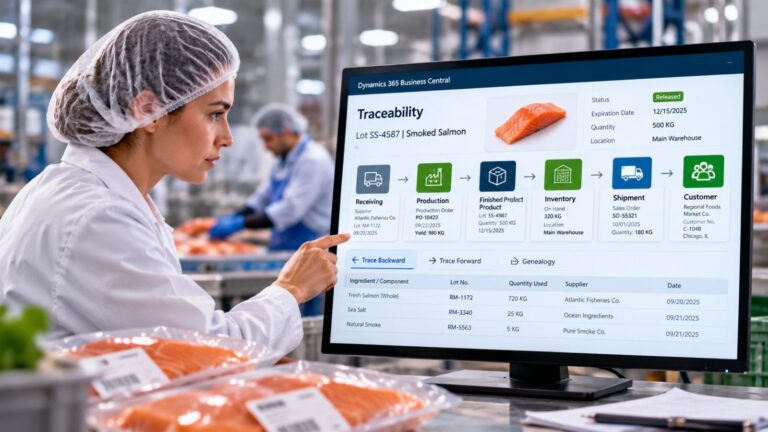
- End-to-End Supply Chain Visibility: An ERP provides a unified view of the supply chain, from suppliers of raw ingredients to distribution. This visibility makes it easier to identify which inputs are affected by new tariffs at any given time. For example, if a tariff is announced on imports of a particular ingredient or packaging material, the ERP system can quickly report where that item is used in the company’s recipes or production, and what current inventory levels are. Such transparency allows manufacturers to react fast – rerouting orders or adjusting production – before costs escalate.
- Cost Modeling and Scenario Planning: Tariff changes demand rapid financial analysis. ERP systems like DynamicsFoodERP support detailed cost modeling, so manufacturers can simulate “what-if” scenarios. Leaders can model how a 10% or 25% import duty on a given ingredient will impact unit costs, gross margins, and profitability across product lines. By integrating tariff rates into bills of materials and procurement data, the system enables data-driven decisions on pricing adjustments or margin protection strategies. This kind of scenario planning is critical when negotiating contracts or deciding whether to absorb costs or pass them on.
- Alternative Sourcing and Supplier Management: With an integrated ERP, companies can more easily qualify and onboard alternate suppliers – whether domestically or in different countries. If a key input suddenly becomes cost-prohibitive due to a tariff, the ERP’s supplier management module can help procurement teams identify other global suppliers (perhaps in tariff-free countries), compare costs, and even manage vendor approval workflows (ensuring quality and safety standards are met). Additionally, robust ERP systems track supplier performance and lead times, helping manufacturers balance the cost benefits of a new source against potential risks like longer shipping times or smaller capacities. This agility in supplier switching can be the difference between halting a production line versus keeping it running on a new source of materials.
- Inventory and Lead Time Optimization: Tariff announcements often come with some lead time before taking effect. An ERP can aid in strategically building up inventory of critical imported ingredients in advance of a tariff implementation, or conversely, running down inventory if an export market is about to impose duties (to avoid stock that can’t be sold competitively). By analyzing inventory levels and safety stock parameters, the system helps planners strike the right balance – increasing stock for price-sensitive items ahead of a tariff hike, and optimizing logistics to minimize storage costs. This level of planning requires accurate, real-time data, which an integrated system provides.
Turning Tariff Uncertainty into Opportunity
Tariffs may not always be predictable, but what they reliably introduce is change – whether in sourcing strategies, cost structures, or customer expectations. For food manufacturers, these disruptions can either strain operations or create opportunities to rethink the supply chain.
DynamicsFoodERP has long supported food manufacturers through periods of volatility. When one of our early NAV customers faced unexpected surcharges in the early 2000s, they found themselves in unfamiliar territory. Our quick response enabled a seamless adaptation during their critical go-live phase, swiftly integrating the changes and maintaining operational continuity. Such transient situations require rapid decision-making and flexibility, qualities deeply embedded in our approach and solutions.
Today, new trade dynamics emerge and global supply chains evolve, food manufacturers need systems that can flex with them. Whether tariffs present a challenge or an opening, DynamicsFoodERP continues to be a trusted partner. With proven responsiveness and industry-specific tools, we empower you to turn complexity into clarity, and ensure your operations remain resilient, no matter what the next shift brings.